Eleanor Spens
About
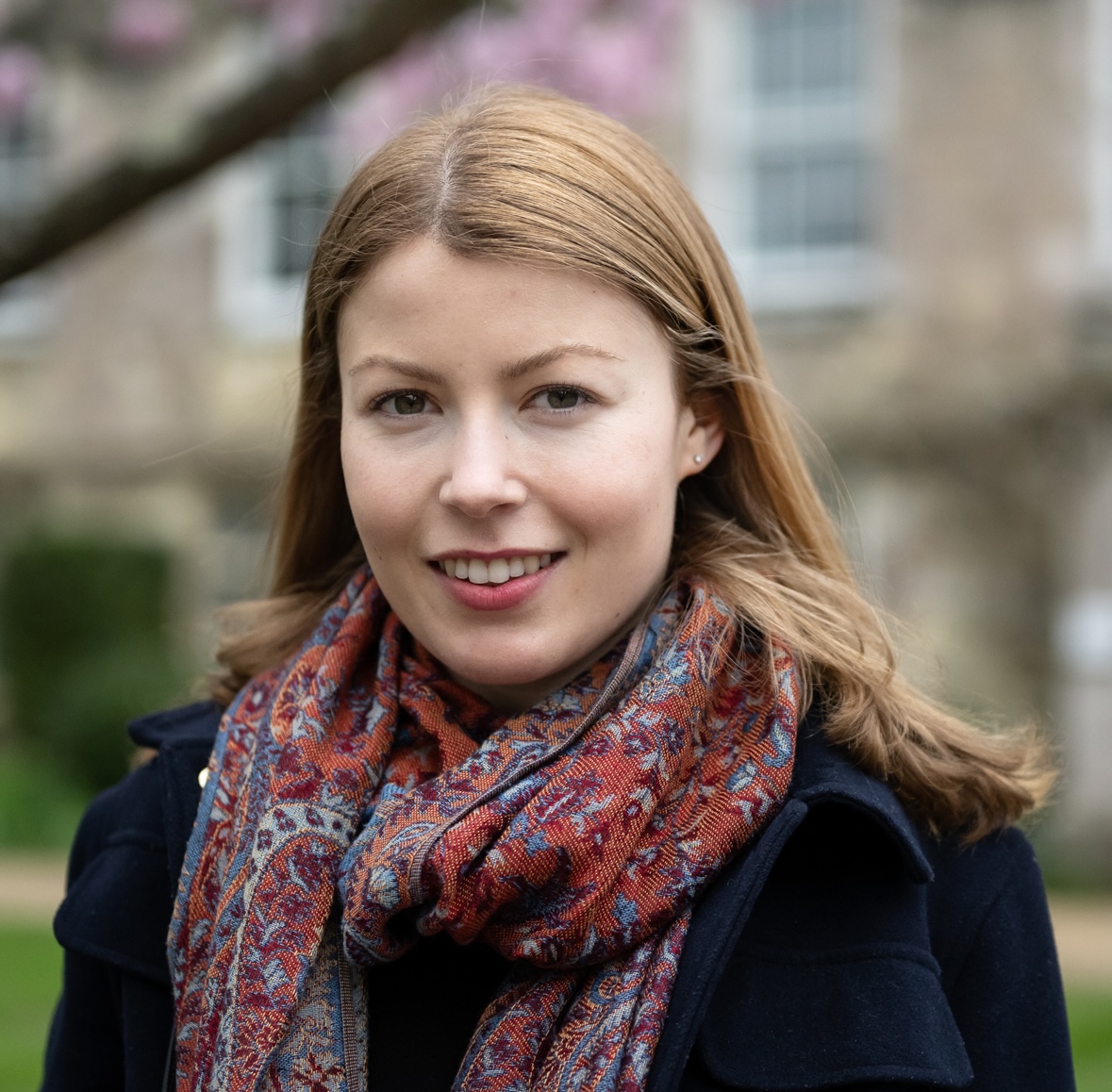
Hi, I’m Ellie. I’m currently a postdoctoral researcher in Tim Behrens’ lab at Oxford, working on how our brains learn predictive models of the world offline, how frontal cortex develops useful abstractions, and how this relates to recent advances in AI. In October, I’ll be joining St John’s College, Oxford as a Career Development Research Fellow.
Previously, I did my PhD with Neil Burgess at University College London, modelling systems consolidation as the training of generative models in cortex on replayed memories. Before that, I worked in machine learning in the UK Civil Service for a few years. I studied Physics and Philosophy at Oxford for my first degree, followed by a part-time MSc in Cognition and Computation at Birkbeck, University of London.
Past projects
Hippocampo-neocortical interaction as compressive retrieval-augmented generation
Eleanor Spens and Neil Burgess, Nature Communications (2026)
Link: https://www.nature.com/articles/s41467-026-74357-6
Abstract: Many cognitive functions involve interplay between episodic (hippocampal) and semantic (neocortical) systems, but the mechanisms are unclear. We present a computational model in which sequential experiences are encoded in hippocampus in compressed form and replayed to train a neocortical generative network. This network captures the gist of specific episodes and extracts statistical patterns that generalise to new situations, enabling efficient reconstruction of the past and prediction of the future. The two systems interact during recall and prediction, with the hippocampus retrieving relevant episodic information into working memory as a basis for generation using the ‘general knowledge’ of the neocortical network. We simulate this interaction as ‘retrieval-augmented generation’, with the addition of mechanisms to compress episodic memories into hippocampus and to consolidate them into neocortex. The model explains changes to memories over time, including schema-based distortions, and shows how recent episodic and semantic memory contribute to new problem solving.
TL;DR: This project asked three questions: how episodic memory influences semantic memory, how semantic memory influences episodic memory, and how the two systems work together. The proposed answer is that hippocampus stores sequential experiences in compressed form, while neocortex learns a generative model from replayed memories by minimising prediction error. During recall and reasoning, retrieved episodic memories provide context for neocortical generation. This resembles retrieval-augmented generation in an large language model, with addition of compression and consolidation mechanisms.
A generative model of memory construction and consolidation
Eleanor Spens and Neil Burgess, Nature Human Behaviour (2024)
Link: https://www.nature.com/articles/s41562-023-01799-z
Blog: Springer Communities post
Abstract: Episodic memories are (re)constructed, share neural substrates with imagination, combine unique features with schema-based predictions and show schema-based distortions that increase with consolidation. Here we present a computational model in which hippocampal replay (from an autoassociative network) trains generative models (variational autoencoders) to (re)create sensory experiences from latent variable representations in entorhinal, medial prefrontal and anterolateral temporal cortices via the hippocampal formation. Simulations show effects of memory age and hippocampal lesions in agreement with previous models, but also provide mechanisms for semantic memory, imagination, episodic future thinking, relational inference and schema-based distortions including boundary extension. The model explains how unique sensory and predictable conceptual elements of memories are stored and reconstructed by efficiently combining both hippocampal and neocortical systems, optimizing the use of limited hippocampal storage for new and unusual information. Overall, we believe hippocampal replay training generative models provides a comprehensive account of memory construction, imagination and consolidation.
TL;DR: As memories are replayed over the course of systems consolidation, they update a generative model of the world that supports memory as well as reasoning about future situations. Even right after an experience, remembering involves imagining the past based on concepts, combining some stored details with expectations about what happened.
Modelling the control of offline processing with reinforcement learning
Eleanor Spens, Neil Burgess, and Tim Behrens, NeurIPS (2025)
Link: https://openreview.net/pdf?id=BFW1fkB8ck
Abstract: Brains reorganise knowledge offline to improve future behaviour, with ‘replay’ involved in consolidating memories, abstracting patterns from experience, and simulating new scenarios. However, there are few models of how the brain might orchestrate these processes, and of when different types of replay might be useful. Here we propose a framework in which a meta-controller learns to coordinate offline learning of a lower-level agent or model in ‘sleep’ phases to maximise reward in an ‘awake’ phase. The meta-controller selects among several actions, such as learning from recent memories in a hippocampal store, abstracting patterns from memories into a ‘world model’, and learning from generated data. In addition, the meta-controller learns to estimate the value of each episode, enabling the prioritisation of past events in memory replay, or of new simulations in generative replay. Using image classification, maze solving, and relational inference tasks, we show that the meta-controller learns an adaptive curriculum for offline learning. This lays the groundwork for normative predictions about replay in a range of experimental neuroscience tasks.
TL;DR: We present a framework in which a meta-controller chooses among metacognitive actions during ‘sleep’, inspired by offline processing in brains, to optimise behaviour during ‘wake’. The system also learns what to replay or simulate, enabling normative predictions about optimal offline learning.
Current projects
The brain develops a hierarchy of abstractions by learning to compress experience. This limits the amount of information that must be stored in episodic memory (to remember past events) or in working memory (to plan future behaviour).
My previous work has mostly explored how episodic memories are compressed and consolidated into semantic knowledge. Critically, our knowledge has complex hierarchical structure. When watching a TV show, one keeps track of information over varying timescales, e.g. the gist of the series so far, the plot of the current episode, and the sensory stimuli in the last few seconds. Without such a hierarchy, the limits on working memory (Miller, 1956) would make understanding very difficult, as this would require maintenance in working memory of many hours of video. This hierarchy is just as important for planning the future, as it allows planning over long time horizons; planning a journey across London does not require maintaining every motor movement in working memory, as one can rely on high-level abstractions like ‘take the Victoria Line’. In other words, such conceptual hierarchies allow us to understand and plan over long timescales without representing every detail at once. That is, representing long and complex events efficiently by compressing them as much as possible allows storage despite limits on episodic memory capacity and reasoning despite limits on working memory capacity.
My current research involves building computational models in which events are represented at multiple levels of abstraction, considering a range of stimuli from trajectories in mazes to narratives. The central idea is that the brain should represent information at the level most useful for the current problem: items should be represented in detail in working memory when they deviate from predictions, but compressed when predictable, with information passed between levels of the hierarchy during inference and planning. I use deep learning both as a modelling tool, to scale theoretical ideas to complex stimuli, and as an analysis method, to decode the content of neural representations during naturalistic tasks.
Contact
Please feel free to get in touch if you have any questions or would like to collaborate!
- Email: ellie.spens@ndcn.ox.ac.uk
- GitHub: @ellie-as